
Frameworks help.
Spend your time napping, not planning.

Okay everybody, it’s September. Slip into a hoodie in the morning and crank the AC at 3pm. Oh, and get back to a regular schedule.
To make the most of the couple of months before the holidays, you’re gonna need a framework.
“You mean an uncaring taskmaster that steals my autonomy and smothers my creativity? That kind of framework?”
No, a simple structure to contain your creative chaos so you make progress without the stress. That kind of framework.
Frameworks are as flexible as you like. They support your creativity without getting in the way.
Before I found a framework, I struggled with page layout and composition.
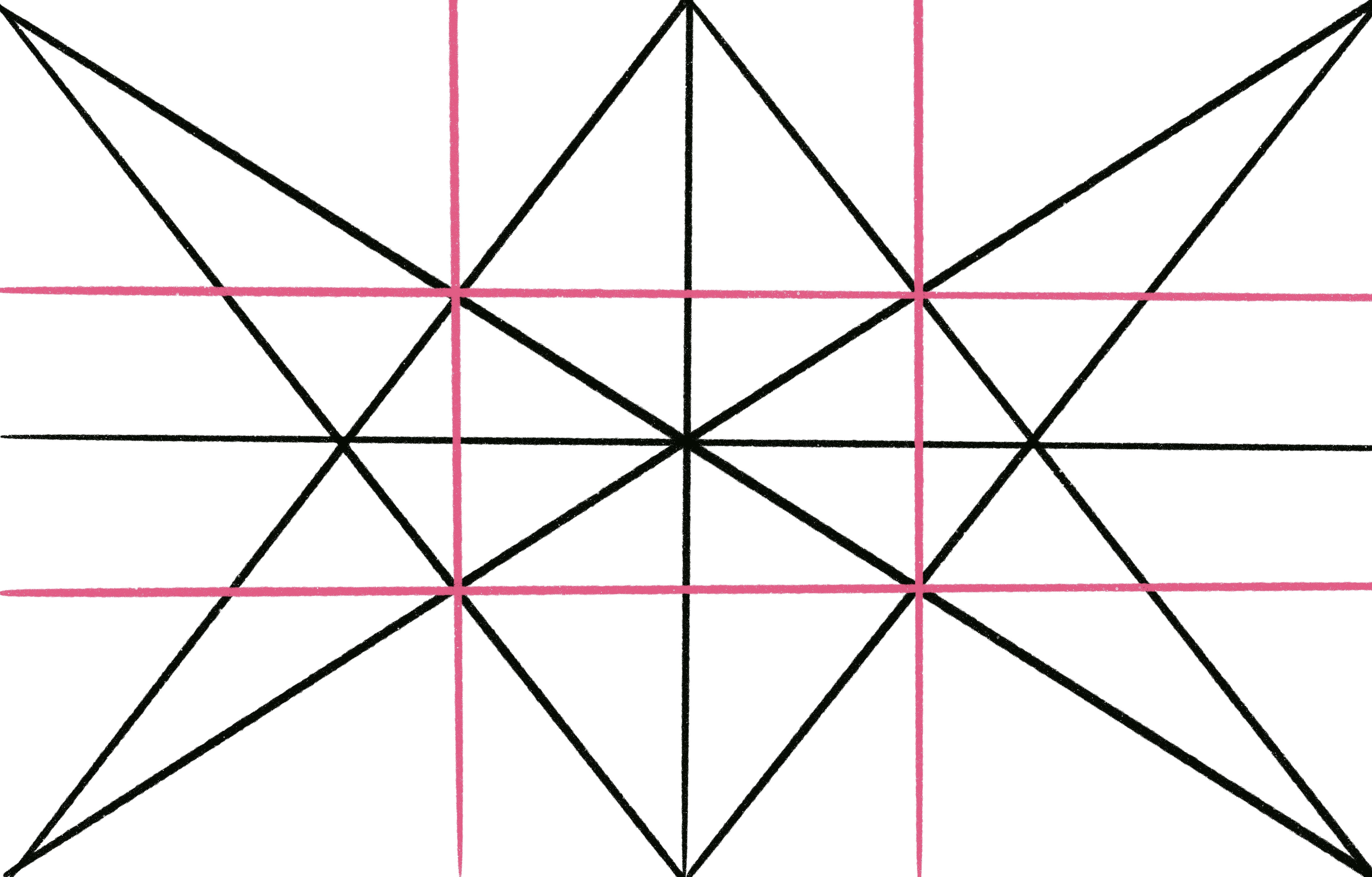
Now I use a system called dynamic symmetry. Artists and photographers use it for their compositions. It’s a simple grid with endless possibility.
This is one version.
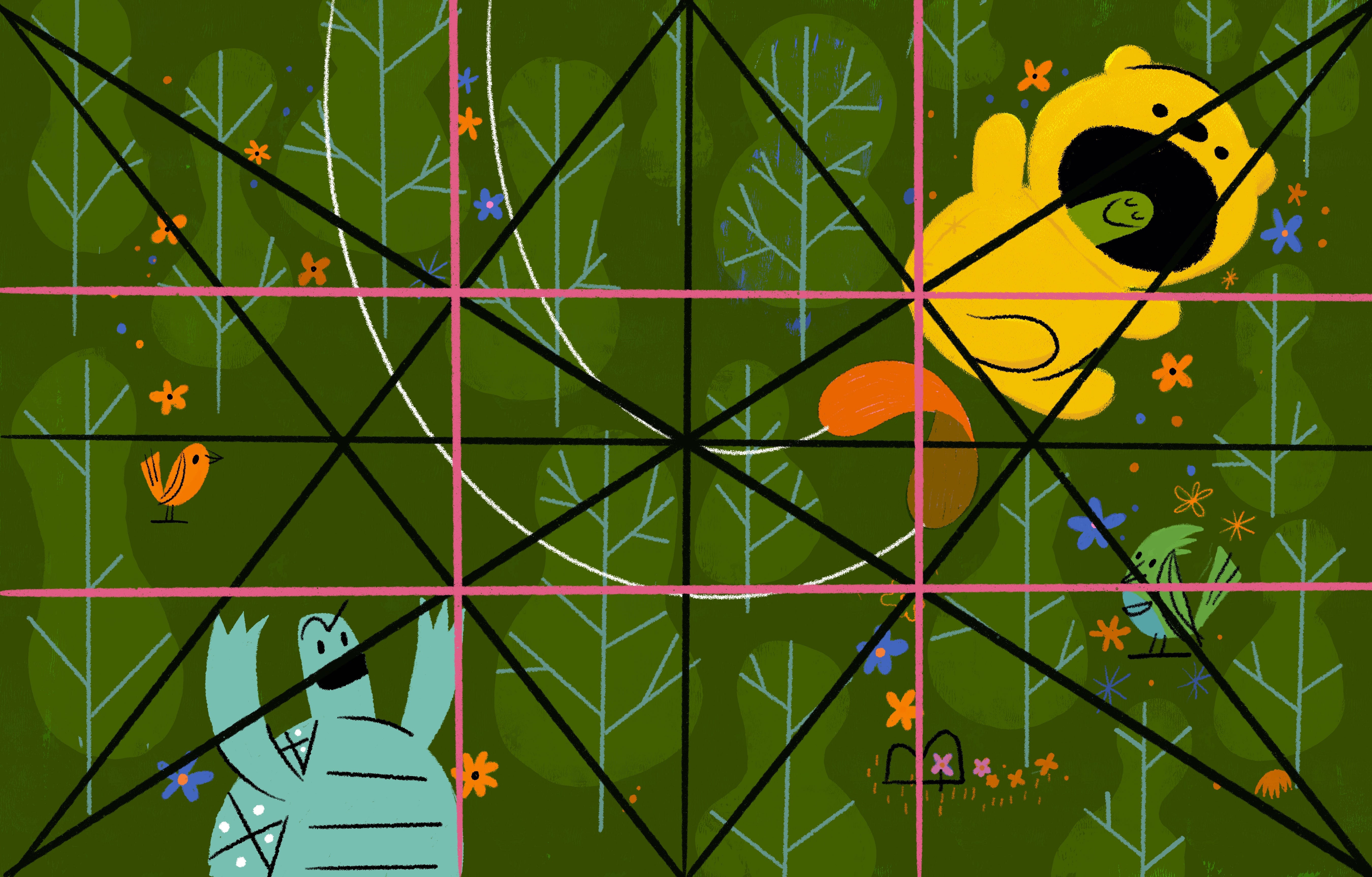
I used it to create this whimsical illustration from one of my delightful children’s books.

Here it is with the grid.
Here’s what it would look like had I not used a framework.
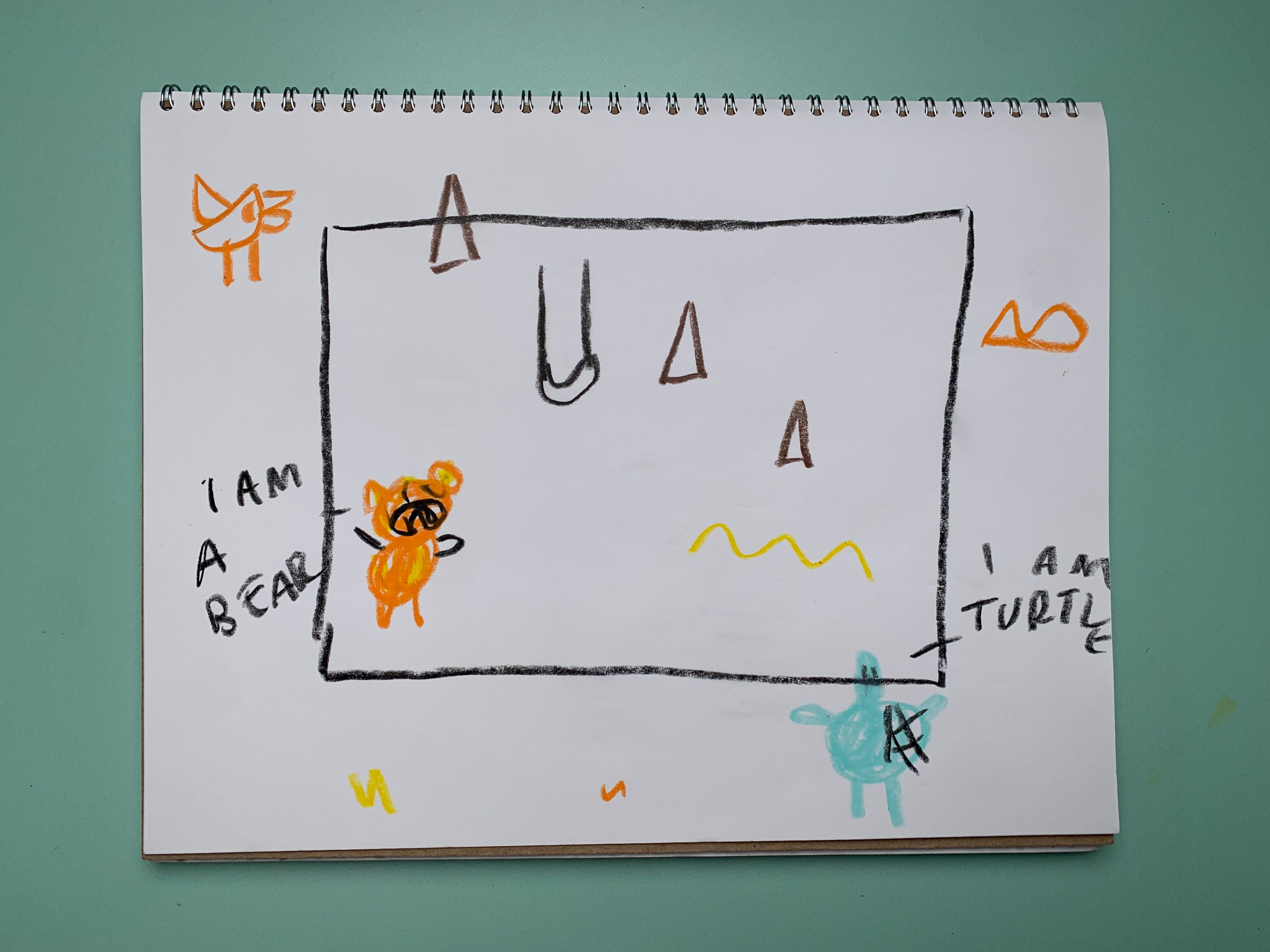
See?
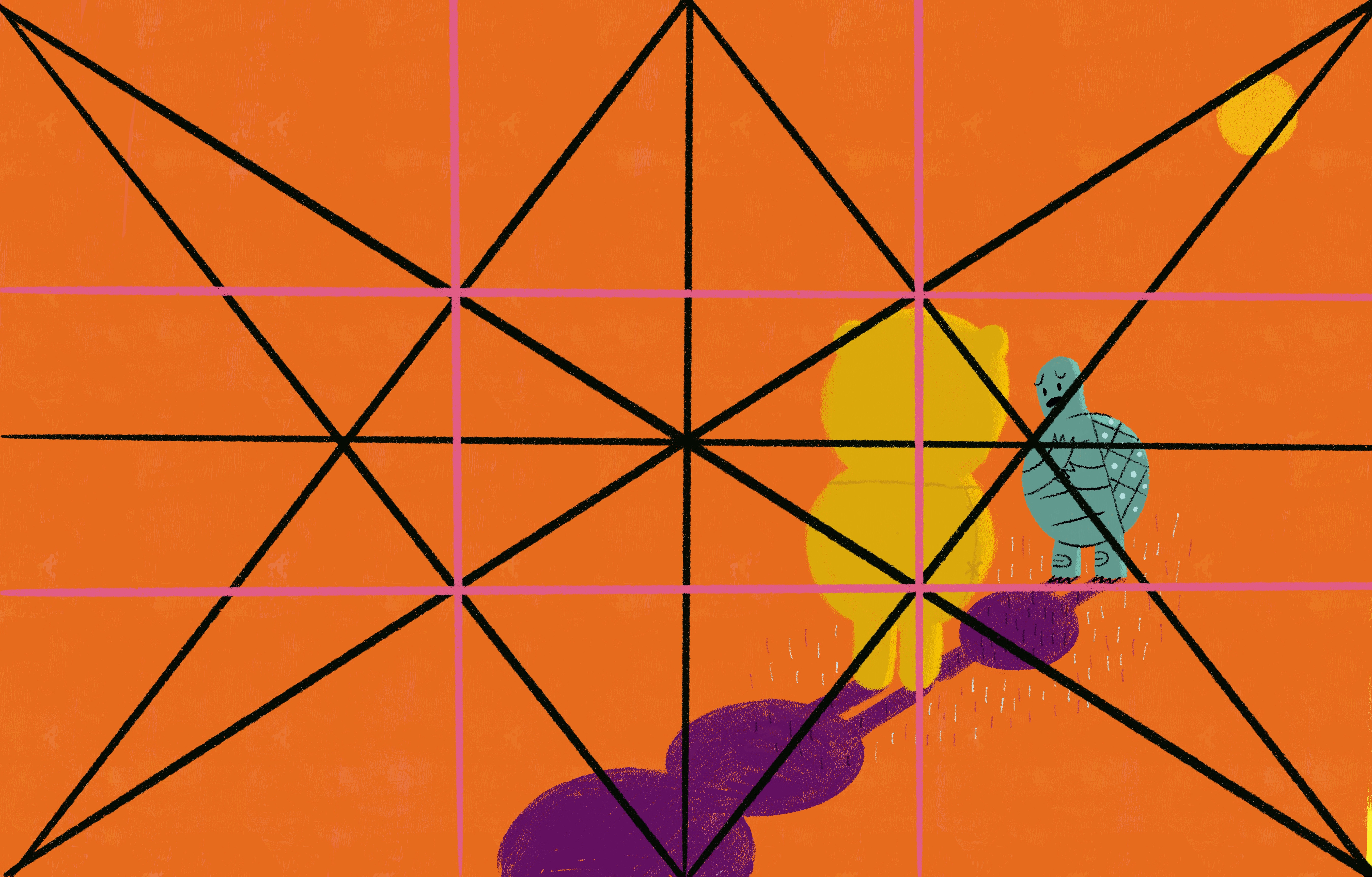
Here’s another illustration from the runaway smash hit Bearsuit Turtle Makes a Friend, available at your local independent bookseller. Same framework, different layout.
Google dynamic symmetry if you want to know more about dynamic symmetry.
“Do movies use a framework, Bob?”
Good question.
Every Movie Ever
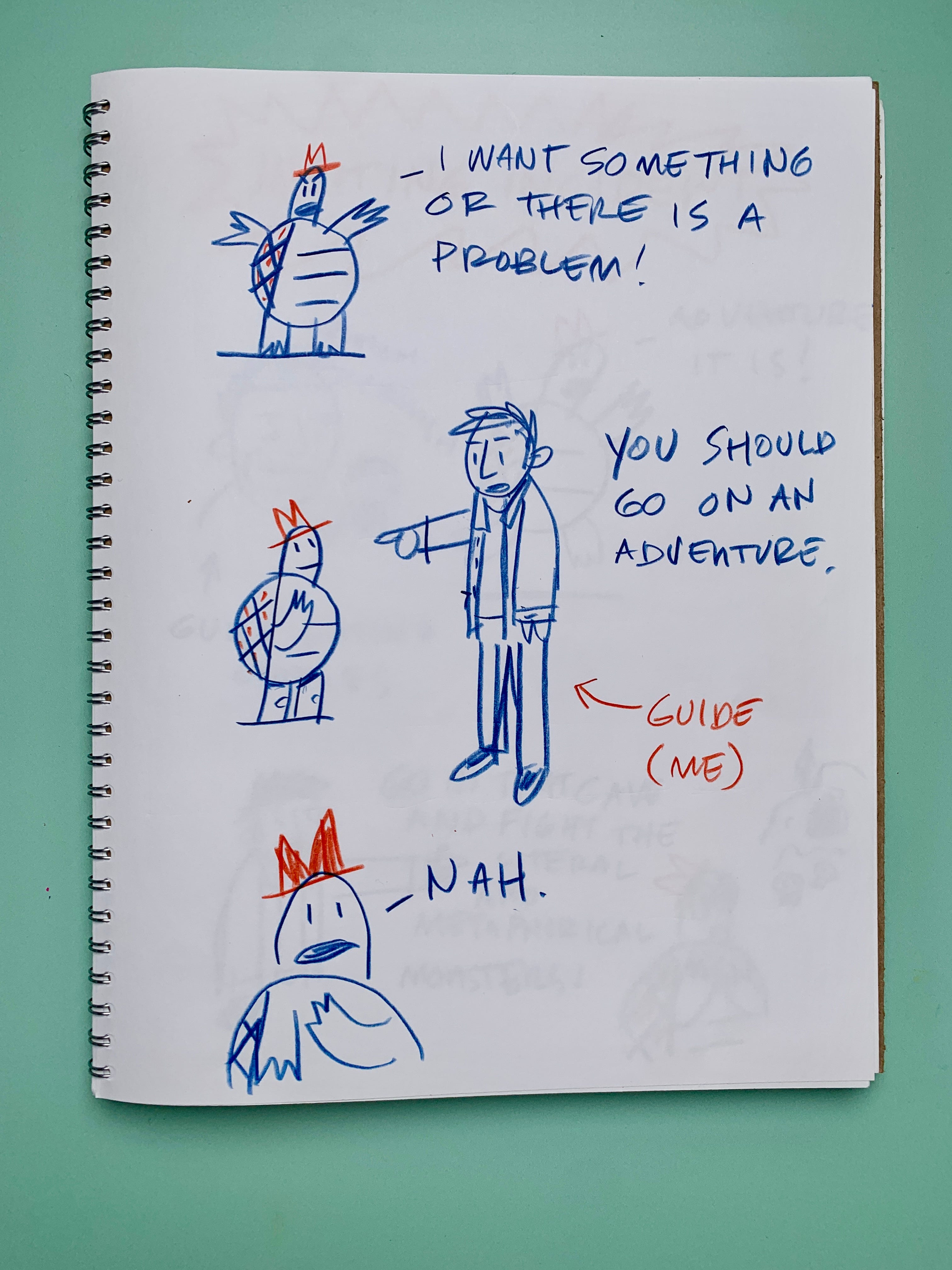
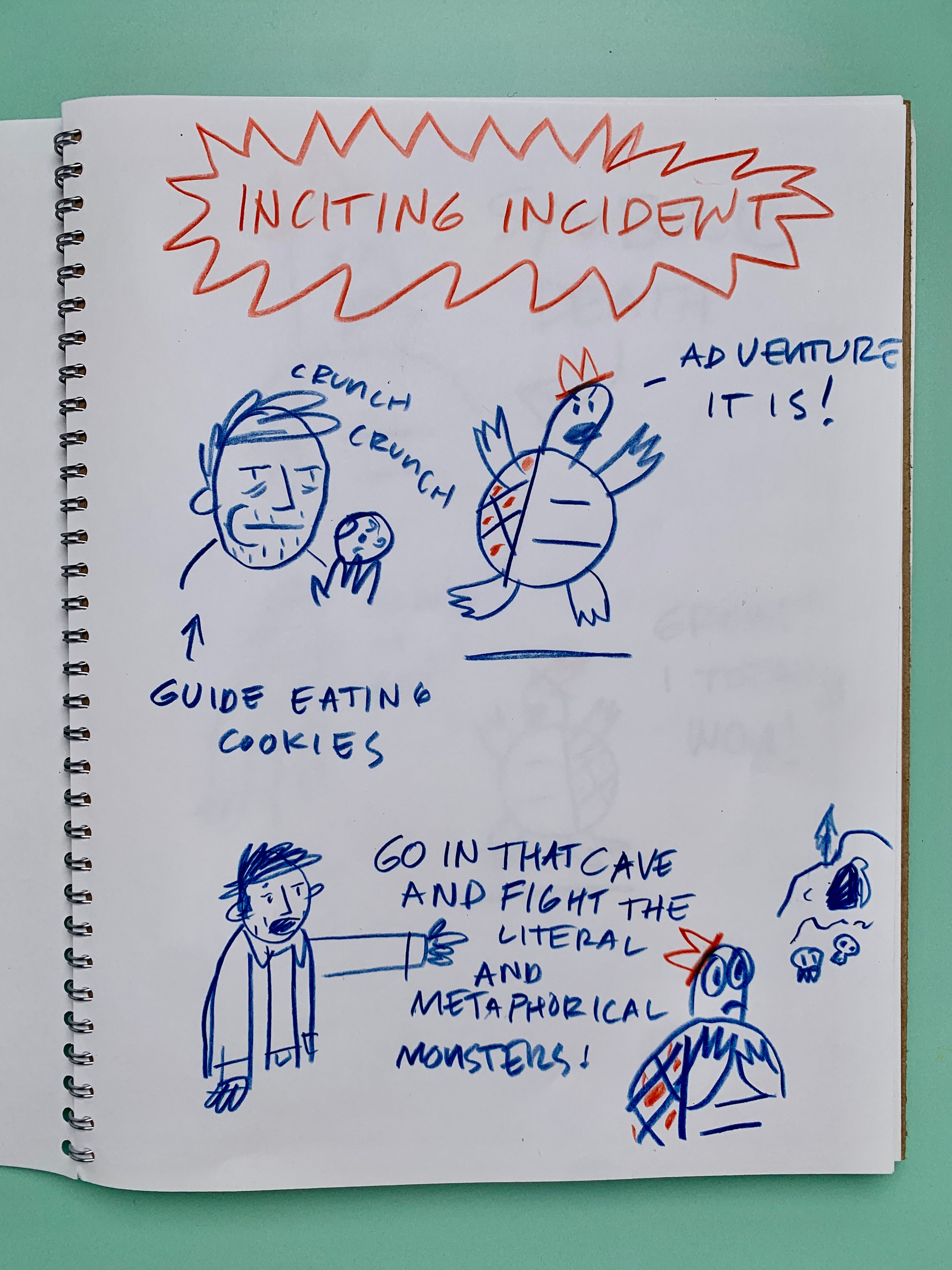
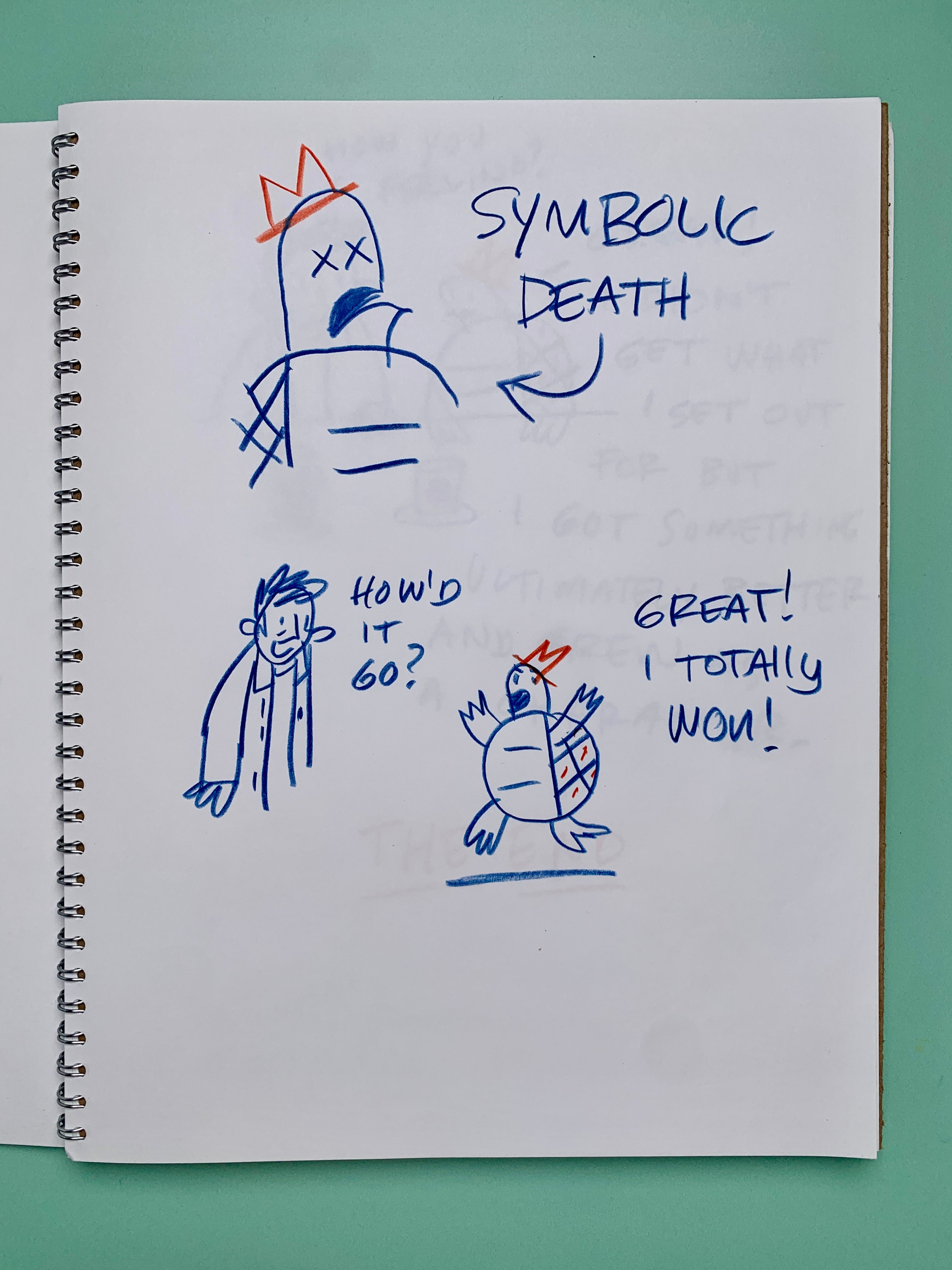
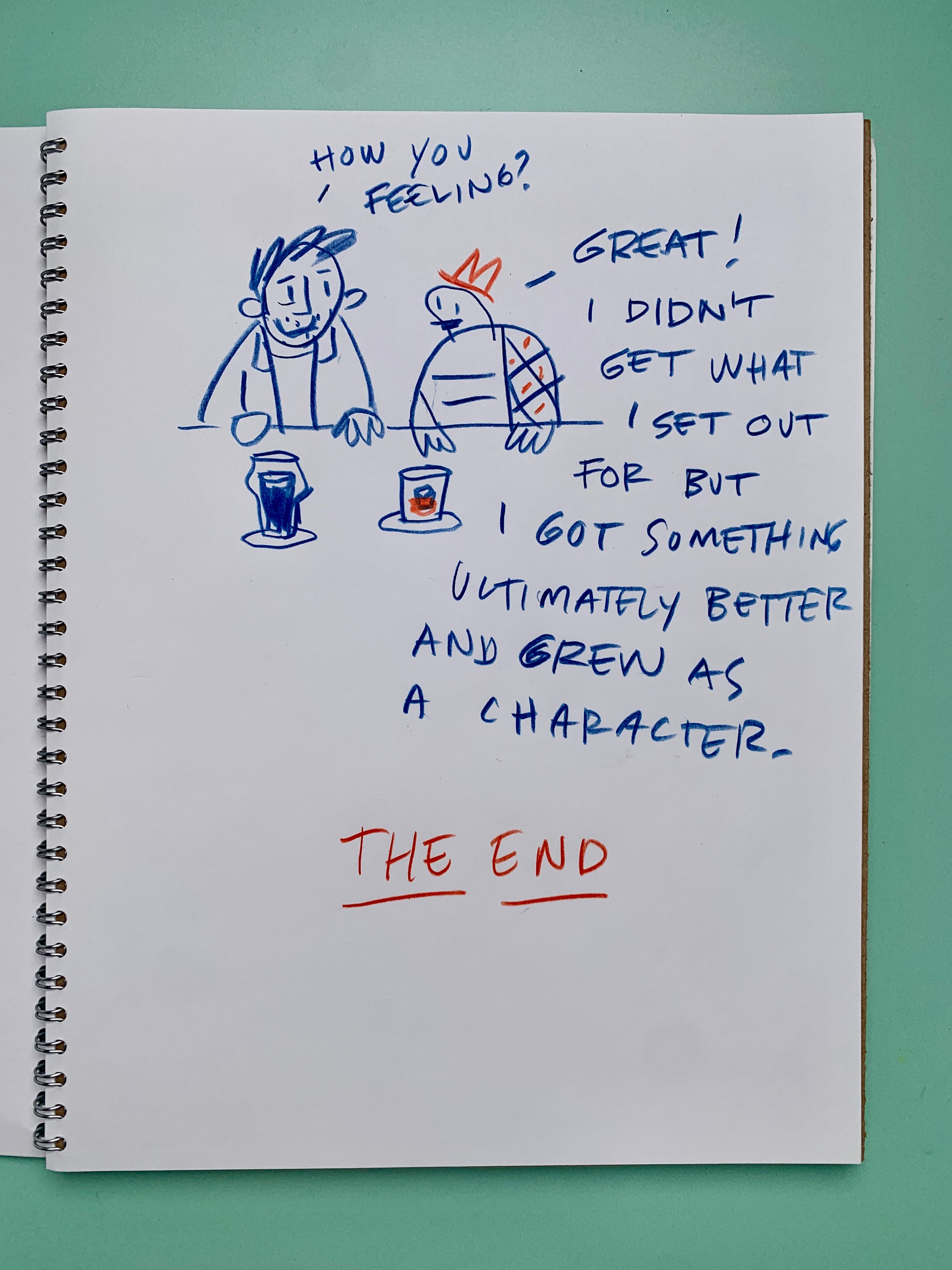
You know how many movies use this structure? Most of them.
A framework isn’t a restraint, it’s the scaffolding that lets you build anything.
Time Blobbing is a framework based on awareness.
Have you been Time Blobbing? No? Here’s a refresher.
Time Blobbing is the framework that keeps me aware of everything I need to do, how much time I have and how long things take. When I would just sort of wing it, I would forget things, miss deadlines, overcommit and be stressed out all the time. Now I’m stressed out from the news, not my incompetence.
Look.
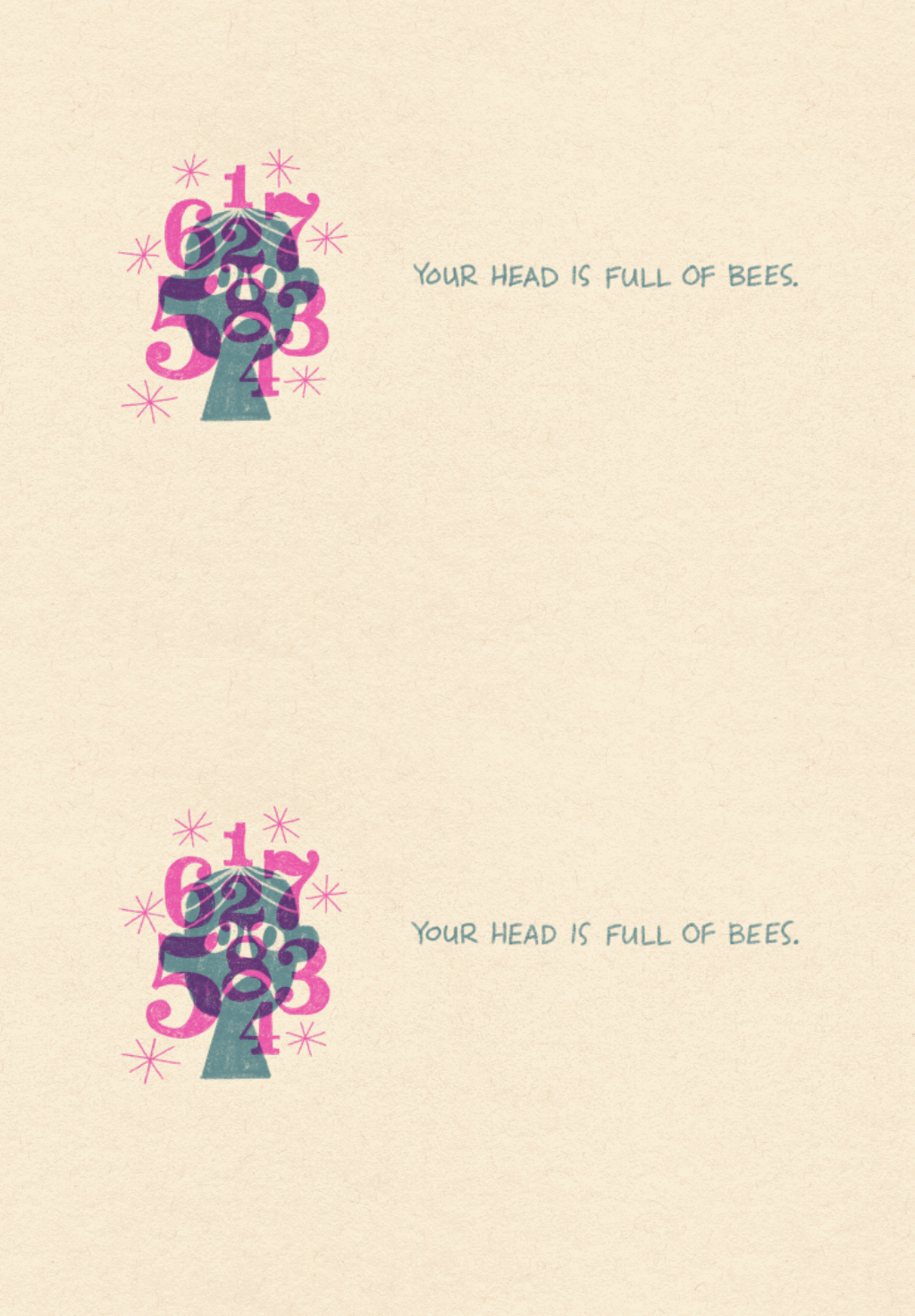
Capture all the bees. Write down everything you have to do. Projects, appointments, meetings, calls, everything.
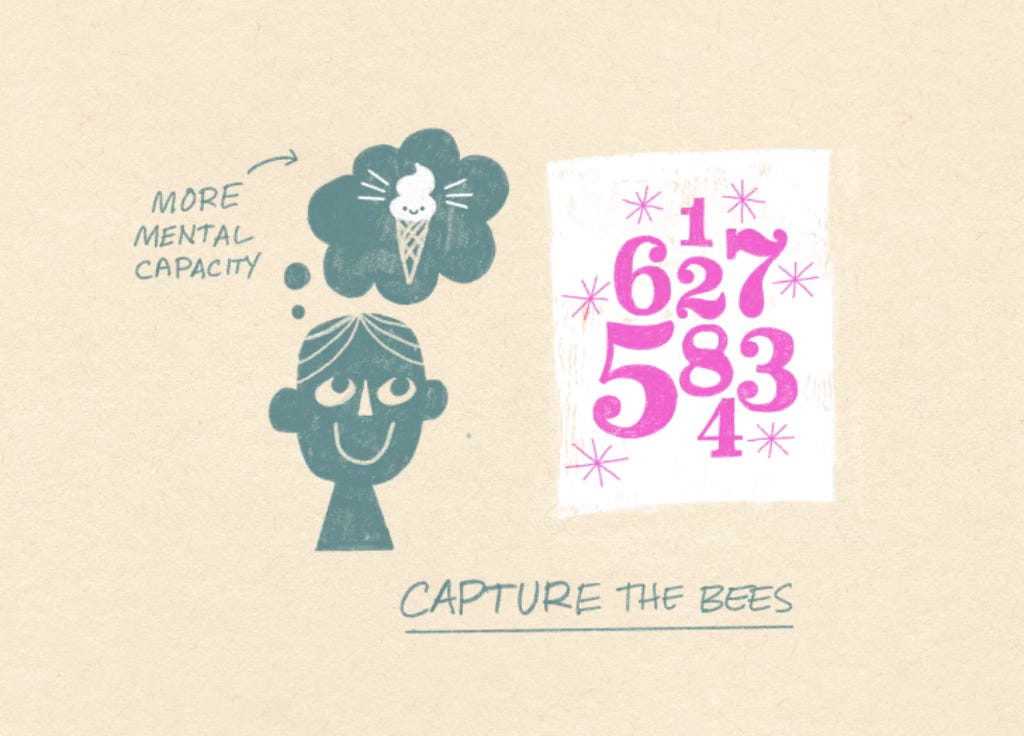
Looking at everything in a big pile gives you a sense of control.
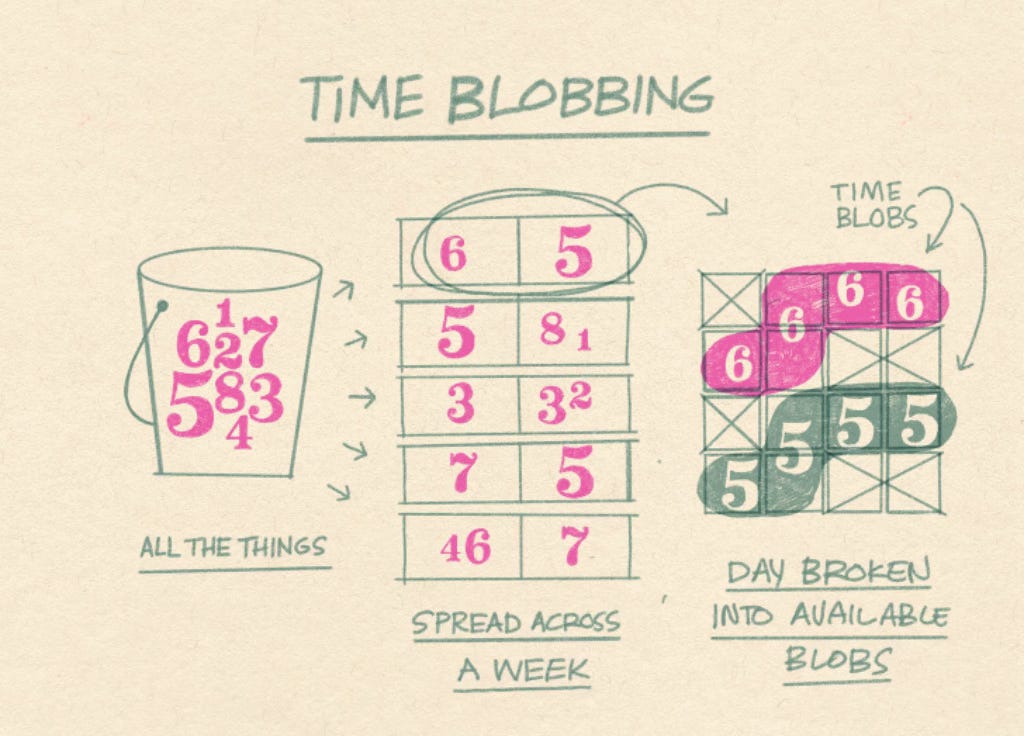
Take the bucket of things and rough out the week. Use the rough plan to map out your day in 30 minute increments. Identify blobs of usable time and plug in your tasks. Now you know how much you have to do and when you plan on doing it. This is an oversimplification, but you can find the full story in the Time Blobbing PDF I sent you when you subscribed.
Time Blobbing is designed to be easy to use and work even when I don’t use it. Even days I don’t write things down, I have an awareness of where I am in the day and what I should be working on. The first twenty years as a self-employed creative I let each day tell me what to do. It wasn’t great. I lost of lot of clients and was stressed out and awful to be around.
Time Blobbing makes working for yourself as cool as it sounds to a person with a job.
Some time ago I was working on a piece, and then I came across the rabatment framework reading a book about Maurice Noble. It more or less fit the composition I had put together, but improved it a lot and even helped figure out some parts that weren't working.
I guess a good way to go about it is how Noble approached using references: look at it, but put it away when you're drawing – at least at first. Then sure, look at it again, fix what needs to be fixed. This way you balance both structure and spontaneity.
Hi Bob,
How much time do you usually allocate to writing and drawing picture books?
Thank you for the bit about dynamic symmetry!
R.D.